
Best Anti-Fatigue Kitchen Mats: How to Choose a Non-Slip Option
Standing in the kitchen for long periods can quickly become tiring, especially on hard floors. Whether you’re cooking dinner, washing dishes, or meal-prepping for the week, the constant pressure on your feet and lower back can leave your whole body feeling tired by the end of the day.
That’s where anti-fatigue kitchen mats can make a noticeable difference. Designed with supportive cushioning and non-slip backing, these mats help reduce strain while making the kitchen feel safer and more comfortable to move around in.
However, not all kitchen mats are made the same. Some flatten quickly, slide around on smooth floors, or become difficult to clean after everyday spills and messes. In this guide, we’ll explain what to look for in anti-fatigue kitchen mats, including cushioning, materials, sizing, and non-slip features, so you can choose an option that feels comfortable and practical for your kitchen.
What Are Anti-Fatigue Kitchen Mats?
Anti-fatigue kitchen mats are cushioned floor mats designed to reduce pressure on your feet, legs, and lower back while standing for long periods in the kitchen. Unlike a standard decorative rug, they are typically made with high-density foam or ergonomic materials that provide extra support and shock absorption underfoot.
They’re most effective in high-traffic spots where you spend the most time standing, such as in front of the kitchen sink, stove, kitchen island, or countertop. By creating a supportive surface underfoot, these mats help reduce muscle strain, making everyday tasks like cooking or meal prepping feel much less like a chore.
A key feature of a quality mat is its non-slip backing. In a busy kitchen, water spills and oil splashes can turn a smooth tile or timber floor into a hazard. A mat that stays securely in place adds an extra layer of safety, especially when carrying heavy pots or moving quickly around the kitchen. Beyond comfort and safety, these mats can also help protect your flooring from scratches, moisture, and everyday wear in high-traffic kitchen areas.

What to Look for in Anti-Fatigue Kitchen Mats
Non-Slip Backing
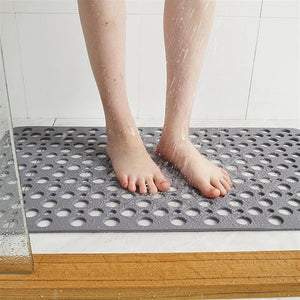
One of the most important features of any kitchen mat is a reliable non-slip backing. Kitchens are naturally prone to water splashes, oil and food spills, which can turn smooth surfaces slippery very quickly. Similar safety features are also important when choosing non-slip mats for slippery areas around the home.
Look for mats with rubberised or textured backing that helps keep the mat securely in place while you move around the kitchen. A mat that constantly slides or curls at the edges can quickly become more frustrating and less safe than helpful. This is especially important in busy households, homes with children, or for older adults.
Comfortable Cushioning
The main purpose of an anti-fatigue mat is to reduce pressure on your feet and lower body while standing. A supportive cushioned layer helps distribute weight more evenly, making long periods of cooking or washing dishes feel more comfortable.
However, thicker doesn’t always mean better. A mat that’s too soft may lose support over time, while one that’s too firm can feel uncomfortable underfoot. Ideally, you want cushioning that feels supportive without sinking too much when you stand on it. High-density foam, memory foam, rubber, and polyurethane are some of the most common materials used in anti-fatigue kitchen mats. In most home kitchens, mats around 1.5 to 2 cm (0.6-0.8 inches) thick usually provide a good balance between comfort and support without feeling too soft underfoot.
Easy-to-Clean Materials
Kitchen mats deal with constant spills, crumbs, water, and food splatters, so easy maintenance matters just as much as comfort. Water-resistant or wipe-clean surfaces are usually the most practical option, especially in busy kitchens where quick cleaning is important.
Polyurethane and PVC mats are popular because they’re durable, stain-resistant, and easy to wipe clean after spills. Rubber mats are also highly durable and naturally slip-resistant, while softer fabric-style mats often create a warmer look but may require more frequent washing, though some might be machine washable. It’s also worth checking whether the material resists stains and absorbs moisture easily, particularly if you’ll place the mat near the sink or cooking area.
The Right Size and Shape
The size of the mat can make a big difference in both comfort and practicality. Smaller mats work well in front of sinks or compact cooking areas, while longer runner-style mats are often better suited to larger kitchens or kitchen islands.
For most kitchens, standard anti-fatigue mats are usually around 40-60 cm (16-24 inches) wide and between 75 to 180 cm (30-71 inches) long, depending on where they’ll be placed. Before buying, it’s always a good idea to measure the area where the mat will go to make sure it fits comfortably without blocking walkways, doors, or drawers. If you have a narrow galley kitchen, a slim runner may work better than several small mats spread throughout the space.
Style and Colour
While comfort and safety should come first, the design of the mat still plays an important role in how it looks in your kitchen. Neutral colours and minimalist designs tend to blend easily with most interiors, especially kitchens inspired by clean and calming styles such as Japandi interior design. Patterned styles, on the other hand, can help hide crumbs, marks, and everyday wear between cleans.
Some people prefer softer, fabric-style mats for a warmer look, while others like sleek wipe-clean finishes for a more modern kitchen aesthetic. Choosing a style that complements your kitchen can help the mat feel like a natural part of the space rather than just a practical accessory.
Who Should Use Anti-Fatigue Kitchen Mats?
Anti-fatigue kitchen mats can be useful for almost anyone, but they are especially beneficial for people who spend a lot of time standing in the kitchen. They are beneficial mainly for:
-
Passionate Home Cooks and Bakers: If you enjoy cooking or baking, or spend a lot of time meal-prepping, the extra support can help reduce the leg and foot fatigue that often comes with standing for a long time.
-
Homes with Hard Flooring: If your kitchen features tile, timber, laminate, or polished concrete, you’ll likely feel the impact of these unforgiving surfaces much faster than on carpet or vinyl.
-
People with Joint or Back Pain: If you already experience discomfort in your feet, knees, or lower back, a supportive mat provides much-needed relief by creating a softer and more supportive surface underfoot.
-
Older Adults: Extra cushioning and a reliable grip underfoot are essential for maintaining comfort and stability while moving around the kitchen.
-
Busy Households: In a high-traffic kitchen where someone is always at the sink or kitchen counter, comfort and slip resistance can make everyday cooking and cleaning feel safer and more manageable.

Comfort Kitchen Mat | Anti Fatigue & Non Slip
UK's #1 Anti Fatigue Kitchen Mat Exhausted after cooking? Aching feet ruining your kitchen joy? Introducing the Comfort Kitchen Mat—Your Solution to Kitchen Fatigue and Discomfort! Say goodbye to ...
How to Keep Your Anti-Fatigue Kitchen Mat Clean and Non-Slip Long-Term?
Regular cleaning not only makes your kitchen mat look better, but also helps maintain its grip and cushioning over time. In a busy kitchen, crumbs, grease, dust, and moisture can gradually build up on both the surface and the underside of the mat, which may affect how securely it stays in place.
For everyday maintenance, shake out loose debris and wipe the surface regularly with a damp cloth or mild cleaning solution. Many anti-fatigue mats are made with water-resistant materials, making them easy to wipe clean after everyday spills or splashes near the sink or stove.
It’s also important to occasionally clean the underside of the mat, especially if it has rubber or textured non-slip backing. Dust and dirt trapped underneath can reduce grip and cause the mat to slide more easily on smooth floors.
If your mat is machine washable, always follow the manufacturer’s care instructions to help preserve the shape, cushioning, and non-slip surface. Harsh cleaning products or excessive heat can sometimes damage foam materials or cause the backing to wear out faster.
To help the mat last longer:
-
Keep the floor underneath dry and clean.
-
Avoid folding the mat sharply when storing it.
-
Replace the mat if the edges begin curling or the backing loses grip.
-
Rotate the mat occasionally in high-traffic kitchens to reduce uneven wear.
Final Thoughts: Choosing the Right Anti-Fatigue Kitchen Mat
The right anti-fatigue kitchen mat can make every time spent in the kitchen noticeably more comfortable, especially if you spend long periods cooking, cleaning, or standing at the kitchen counter. Good cushioning helps reduce pressure on your feet and lower back, while reliable non-slip backing adds an extra layer of safety on hard kitchen floors.
When choosing a mat, focus on the features that matter most for your household, including comfort, grip, easy cleaning, and the right size for your kitchen layout. A well-made mat should feel supportive underfoot, stay securely in place, and hold up well to daily wear and spills.
Whether you prefer a sleek, minimalist style or a more decorative look, a quality anti-fatigue mat is a simple but practical upgrade. It’s often one of those small home essentials people only start to appreciate once they realise how much time they actually spend standing in the kitchen each day.


